
Key Turns but the Door Won’t Open
What’s Happening
When your key turns freely but the door stays shut, the lock mechanism and the door latch or deadbolt bolt have stopped working together. The most common cause is a disconnected or worn tailpiece inside the lock cylinder – the key is doing its job, but nothing is physically moving the bolt. In most cases this is a same-visit repair, not a replacement.
The key turning without resistance is actually a useful clue. It tells you the cylinder itself is probably intact, which narrows the problem down to the hardware that connects the cylinder’s motion to the bolt. That hardware is either broken, misaligned, or seized. A trained technician can usually identify the exact cause within a few minutes of looking at the door, and most of the time the fix is completed before they pack up and leave.
Why It Happens
Broken or Disconnected Tailpiece
The tailpiece is a small metal tab that sticks out of the back of the cylinder and rotates to drive the bolt. After years of use, it can snap, bend, or simply slip out of its seat. When this happens, the cylinder spins freely – sometimes a full 360 degrees with no resistance – and the bolt doesn’t budge. If your key is turning more than it should and nothing catches, a broken tailpiece is the most likely explanation.
Misaligned Strike Plate or Sagging Door
Houses settle. Wood swells in humid weather and contracts in dry spells. Over time, a door can shift just enough that the deadbolt or latch bolt tries to extend into the wrong spot on the door frame – and jams against the plate instead of sliding through the hole. You’ll usually feel a faint thud or scraping resistance when the key reaches the point where the bolt should extend. Look at the gap around your door: if it’s wider at the top than the bottom, or the door has to be lifted slightly to close, settling is almost certainly involved.
Worn or Broken Cam Inside a Mortise Lock
Older homes and many commercial doors use a mortise lock, where a cam – a shaped piece of metal inside the lock body – translates the cylinder’s rotation into bolt movement. After decades of use, the cam can crack or wear smooth. The symptom is the same as a broken tailpiece: the key turns, but nothing happens on the other side of the door. Mortise hardware is common in homes built before the 1970s, and the repair usually means pulling the lock body and inspecting the cam directly.
Frozen or Seized Bolt Mechanism
Locks that haven’t been lubricated in years can build up enough grime and corrosion that the bolt itself seizes in place even when the cylinder moves correctly. This is especially common on exterior doors that face weather. You may hear the lock mechanism working – a faint click or movement – but the bolt simply won’t extend or retract. It can also happen on deadbolts that were installed slightly misaligned and have been fighting the frame every time they close.
What to Do Right Now
- Stop forcing the key. A few gentle attempts are fine. Continuing to apply torque to a cylinder that’s already disconnected from its mechanism can snap the key inside the lock or damage the cylinder – turning a straightforward repair into a more involved one.
- Try lifting or shouldering the door slightly while turning the key. If the door has settled, a small amount of upward pressure on the handle sometimes lines the bolt up with the strike plate just enough to let it extend. Don’t force it – just try gently. If it works, note that the fix is temporary and call for an adjustment.
- Check whether the latch and the deadbolt are both stuck, or just one. If the latch bolt moves but the deadbolt doesn’t (or vice versa), that tells a technician a lot before they arrive. Note which one is the problem.
- Take a quick photo of the door gap. A picture of the space between the door and the frame, from top to bottom, helps a technician assess settling before they even touch the hardware. It takes ten seconds and saves time on the visit.
- Do not attempt to remove the lock cylinder yourself if you are not experienced with lock hardware. Cylinder removal on a deadbolt or mortise lock can look simple and go wrong quickly. You won’t make things worse by waiting for a technician.
How We Fix It
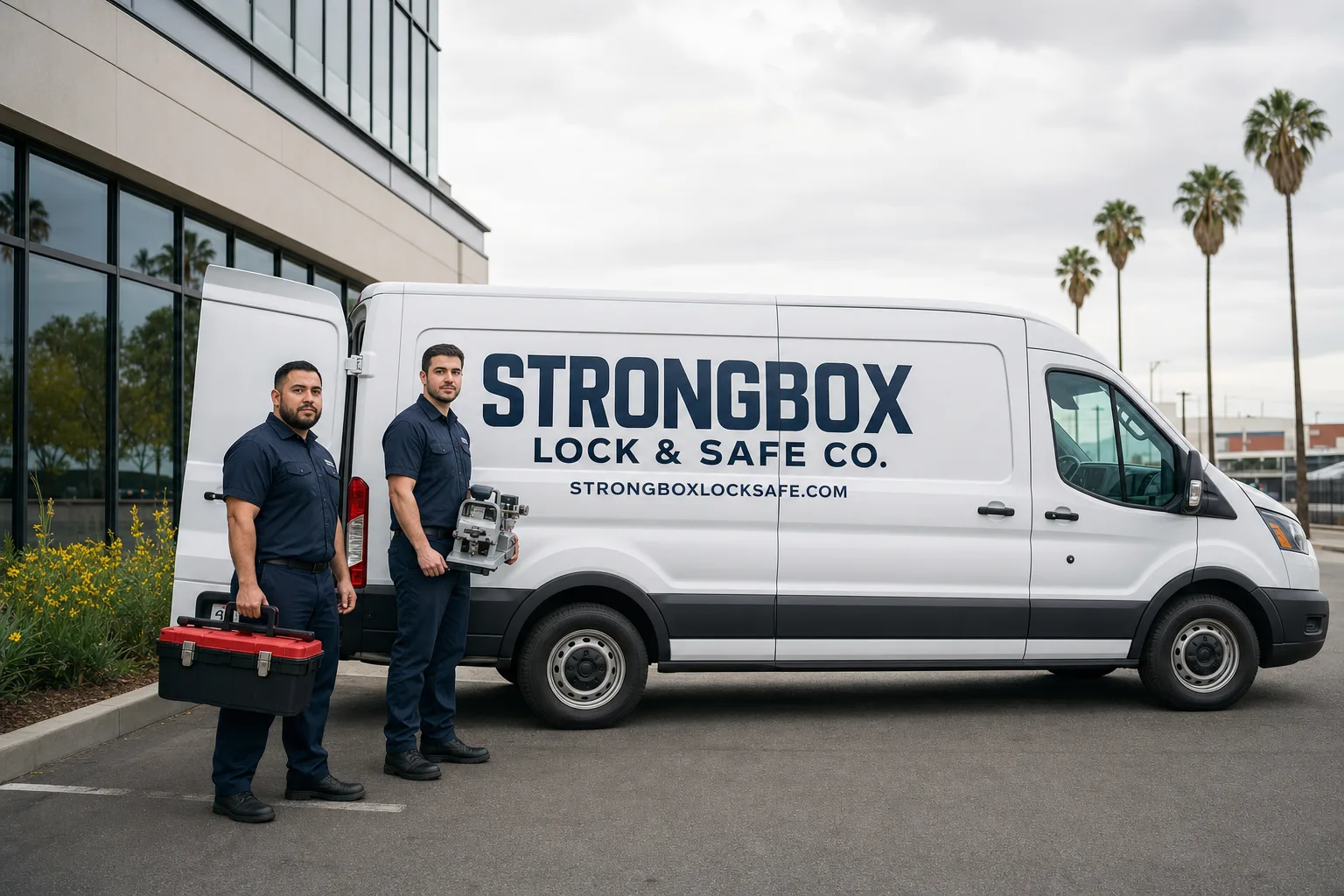
When your local Strongbox Lock & Safe Co. technician arrives, the first thing they do is watch the symptom happen. Key turns, bolt doesn’t move – that five-second observation points directly to where the break in the chain is. From there they’ll remove the cylinder or lock body, inspect the tailpiece, cam, and bolt assembly, and identify the failed component.
If it’s a tailpiece or cam, the part is replaced and the lock is reinstalled and tested. If the bolt is seized, the mechanism is cleaned, freed, and properly lubricated. If the door has settled enough to cause a misalignment, your technician adjusts the strike plate to match where the door actually sits now. Most of these repairs fall under our Residential Locksmith or Lock Installation & Rekey services, and most are completed in a single visit.
Before any work begins, you’ll have a written price in hand – the same number that was quoted on the phone. That’s how we’ve worked since 1984. The job is also covered by our 90-Day Done Right Promise: if anything about this repair isn’t right within 90 days, we come back. In writing, no arguing, no extra paperwork.
Frequently Asked Questions
It depends on which door it is and whether the door can still be secured. If the deadbolt won’t engage, your door may not be locking at all even when it looks closed – and that’s a security problem, not just an inconvenience. A front or back exterior door with a non-functioning deadbolt should be treated as urgent. If you’re not certain whether the door is actually latching, call (877) 664-8139 and describe what you’re seeing – a live person will help you figure out whether it’s same-day urgent or can wait until morning.
Yes. Our phones are answered by a live person every hour of every day, including weekends and holidays – no voicemail, no callback queue. Call (877) 664-8139 and your local Strongbox team will tell you exactly when they can be there.
In most cases, the lock itself doesn’t need to be replaced. A broken tailpiece, worn cam, or seized bolt is a component-level repair – the cylinder and hardware you already have are often in perfectly good shape. If the lock is genuinely beyond service, your technician will say so and explain why before any work starts. You’ll never be quoted a replacement when a repair is the honest answer.
Each job is priced after a technician looks at what’s actually there. The written estimate you receive before work begins covers everything that needs to be done – one lock or two. There are no surprise line items added after the fact. If a second repair makes sense to do in the same visit, that will be on the written quote before anything starts, and you decide. Call (877) 664-8139 to get the process started and get a written price for your specific situation.
Get It Fixed
Call (877) 664-8139 – a live person answers around the clock. Your local Strongbox Lock & Safe Co. team will give you a straight answer, a written price before work begins, and the job backed by the 90-Day Done Right Promise. Most repairs are completed in a single visit.
Written by Gil Navarro, Owner at Strongbox Lock & Safe Co., serving local communities since 1984.