
Key Broke Off in the Lock
What’s Happening
A key breaking off in the lock almost always means the key itself was worn thin, the lock cylinder is dry or corroded, or both problems showed up at the same time. The good news: this is one of the most common calls we get, and in most cases a trained technician can extract the broken piece and get you back inside in a single visit.
When a key snaps inside a cylinder, the remaining stub typically jams the plug so the lock won’t turn at all – from either side. If you’re locked out right now, don’t try to fish the fragment out with a toothpick, a bobby pin, or a knife tip. Those tools almost always push the key deeper, which makes the extraction harder and, in some cases, damages the cylinder beyond a simple fix. Step back, stop turning anything, and read the next section so you know exactly what you’re dealing with.
Why It Happens
The Key Was Already Worn Down
Keys don’t last forever. A house key used a few times a day for ten or fifteen years has had its cuts shaved down by the cylinder pins every single time it was turned. When the valleys in the key get too shallow, the pins don’t seat cleanly, the key binds under load, and the thin metal finally gives. You can usually spot a worn key before it breaks: the cuts look rounded at the edges rather than crisp, and it sometimes takes two or three tries to get the lock to turn.
The Lock Cylinder Is Dry or Corroded
Locks need a small amount of lubrication to work without grinding. Over time, the factory lubricant dries out, dust packs the keyway, and the pins start dragging instead of gliding. A dry cylinder creates resistance the key was never designed to overcome, and the extra torque a homeowner applies to force it through is exactly what snaps a key. If your lock has been stiff or gritty-feeling for a while, dryness is likely the culprit.
The Key Had a Hidden Crack or Flaw
Hardware-store key copies are cut by machine and sometimes by staff who are new to the equipment. A copy can have a slight warp, an off-center cut, or a micro-crack that isn’t visible to the naked eye. These keys can work fine for months and then fail without warning, usually at the bow – the part you grip – or at the first cut near the shoulder. If the key that broke was a copy rather than the original, this is worth mentioning to your technician.
The Lock Itself Is Failing
An old or damaged lock cylinder can develop tight spots inside the plug where the pins don’t move freely. Sometimes a pin spring breaks and the pin cants sideways, catching the key blade. Sometimes the cylinder housing itself has shifted slightly from years of use or a past forced-entry attempt. If you’ve noticed the lock feeling “sticky” in a specific spot in its rotation – not just stiff overall – a failing cylinder is a reasonable suspect.
What to Do Right Now
- Stop turning the lock. If any part of the broken key is still exposed, do not try to grip it with pliers or twist it further. Rotating the cylinder with a broken key inside can score the plug walls, which turns a simple extraction into a full cylinder replacement.
- Don’t push the key further in. It sounds obvious, but the instinct to “wiggle it loose” usually does the opposite. Leave the fragment exactly where it is.
- Take a photo before anything changes. A clear picture of how much key is visible, which direction it’s pointing, and the lock brand helps your technician arrive prepared with the right extraction tools.
- Check your other entry points. If you’re locked out, see whether a back door, garage door, or window is unlocked and accessible at ground level before calling. If you can get inside safely, you’re no longer in an emergency – but the lock still needs to be addressed before you rely on it again.
- Call before you try any DIY extraction. Broken-key extraction tools are inexpensive and sold online, but using them without knowing which direction the key fragment is seated can jam it past the first pin stack, at which point the cylinder almost certainly needs to come out. If you’re not confident, calling is the faster path to a working lock.
How We Fix It
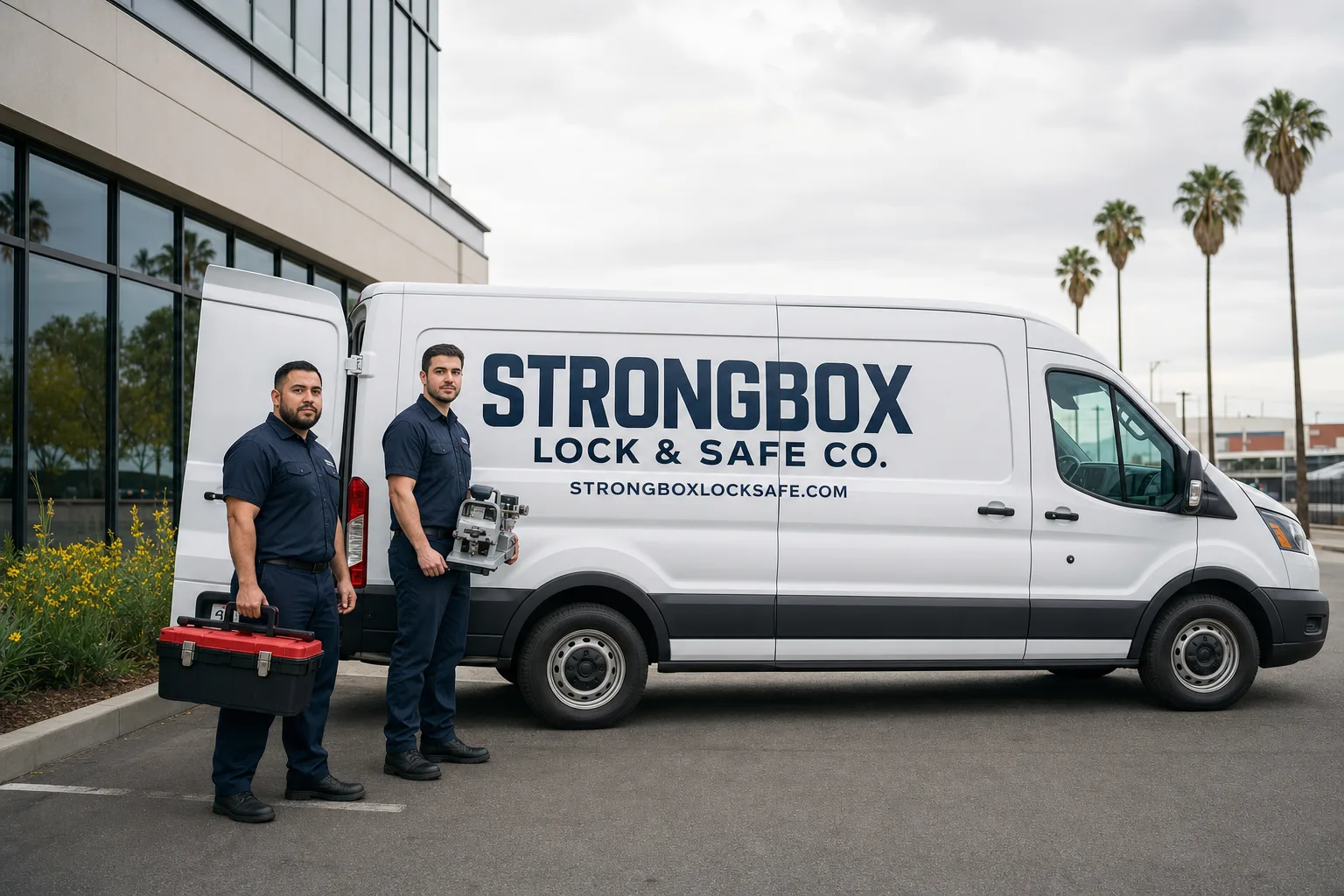
When your local Strongbox Lock & Safe Co. team arrives, the technician will assess how deep the fragment is seated and which direction it’s oriented before touching anything. Most broken-key extractions use one of two professional tools – a hook-style extractor or a spiral extractor – inserted alongside the key blade to grip a cut in the metal and draw it straight out. The whole process usually takes less than fifteen minutes when the fragment is accessible.
Once the key is out, the technician will inspect the cylinder. If the lock is dry, a proper lubricant goes in and you’re done. If the cylinder shows wear, corrosion, or a damaged pin, the honest recommendation will be a rekey or a new lock installation – using hardware from the brands we carry, including Schlage, Kwikset, Medeco, and Baldwin, so the right lock goes on the right door.
Before any work begins, you’ll have the price in writing – the same number quoted on the phone. That’s how we’ve worked since 1984, and it won’t change. Every job is covered by our 90-Day Done Right Promise: if something isn’t right, we come back. No paperwork, no arguing.
Frequently Asked Questions
If you can still lock and unlock the door using a spare key, waiting a day is usually fine – but don’t put it off longer than that. A cylinder with a broken fragment inside is more vulnerable to jamming completely, and a lock you can’t fully trust is a security gap. If you’re locked out right now, it’s urgent. Call (877) 664-8139 and a live person will answer, whatever time it is.
Yes. Our calls are answered by a live person 24 hours a day, every day of the year – including weekends and holidays. Your local Strongbox team will tell you the earliest available window and give you a flat price before anyone leaves the shop. Call (877) 664-8139 to get scheduled now.
In many cases, extraction is all it takes, especially if the cylinder is otherwise in good condition. If the lock is worn, corroded, or was already on its way out before the key broke, the technician will tell you that plainly and explain the options – rekey, cylinder replacement, or a full new lock. You’ll have the information and the written price before you decide anything.
Start with a fresh cut key made from the original, not a copy of a copy. Ask your technician to inspect and lubricate the cylinder while they’re there – dried-out locks are the single biggest contributor to broken keys. If the lock is more than fifteen years old and has seen heavy daily use, replacing it with a quality deadbolt from a brand like Schlage or Mul-T-Lock is often the more practical answer, and it gives you a fresh key set at the same time.
Get It Fixed
Call (877) 664-8139 right now – a live person answers every call, day or night. Your local Strongbox Lock & Safe Co. team will give you a flat price on the phone, arrive prepared, and get your lock working again. Most jobs are done in a single visit, backed by our 90-Day Done Right Promise.
Written by Gil Navarro, Owner at Strongbox Lock & Safe Co., serving local communities since 1984.