
Last updated July 25, 2026
Lock Installation & Rekey Warning Signs Every Homeowner Should Know
Most Los Angeles homeowners we meet don’t think about their locks until something breaks. The key snaps in the cylinder on a Saturday morning, or the deadbolt won’t retract when they’re trying to leave for an appointment. Here’s what surprises people: the failure was announcing itself for months. A lock that requires you to lift the door handle slightly to turn the deadbolt isn’t a quirk of an old house - it’s a misaligned strike plate that will eventually bind completely, and it takes a locksmith about 15 minutes to fix. In this guide and our Locksmith Emergency Preparedness Guide for Los Angeles Homes, we’ll walk you through the subtle mechanical changes that signal a lock needs professional attention, before you’re standing outside your door or worse, leaving it unsecured.
Quick Answer
The warning signs that a lock needs to be replaced or rekeyed include: keys that stick or require jiggling to turn, a deadbolt that doesn’t extend fully into the strike plate, loose mounting hardware that causes the knob or lever to wobble, and keys that feel “different” in the cylinder than they used to. Security warning signs - such as a key that suddenly works more smoothly than before, or evidence of tampering - mean you should call a locksmith within 24 hours. Mechanical warning signs can often wait a few days, but they never resolve themselves.
Table of Contents
- Physical Warning Signs by Lock Component
- Security Warning Signs vs. Mechanical Warning Signs
- When to Rekey vs. When to Replace
- Warning Signs Unique to Smart Locks and Electronic Deadbolts
- How to Document Warning Signs Before Calling
- Los Angeles-Specific Considerations
- Common Mistakes to Avoid
- When to Call a Professional
- Frequently Asked Questions
Physical Warning Signs by Lock Component
A lock is a mechanical system with three main parts: the cylinder where the key enters, the bolt that extends into the door frame, and the hardware that mounts everything to the door. Each component fails differently, and learning to read those failures saves you from a lockout or a security gap.
Cylinder Warning Signs
The cylinder is where most problems start. Pay attention to how your key feels when you insert and turn it.
- Stiff rotation: The key turns, but there’s noticeable resistance. This often means the pins inside are wearing unevenly or there’s debris in the keyway. In our experience across Los Angeles, we see this frequently in homes near the coast - salt air accelerates corrosion inside budget cylinders.
- Key doesn’t return smoothly: You turn the key to unlock, but it doesn’t spring back to the vertical position without help. The return springs are fatiguing. This gets worse, not better.
- Key catches at certain angles: You have to find the “sweet spot” to get the key to turn. The pin chambers are wearing out of tolerance.
- Key requires jiggling: If you’ve developed a ritual - insert, wiggle up, wiggle down, turn - the pin alignment is compromised. This is how keys break.
Bolt Warning Signs
The deadbolt or latch bolt is what actually secures your door. Its failures are easier to see but often ignored.
- Bolt doesn’t extend fully: You turn the key or thumbturn, but the bolt stops short of the strike plate. The door is misaligned, or the bolt mechanism is binding.
- Bolt doesn’t retract fully: The opposite problem - you unlock, but the bolt sticks partially extended. This is how you get locked in your house, or damage the strike plate forcing the door.
- Scraping or grinding sound: Metal on metal means the bolt is dragging against the strike plate or frame. The strike plate holes are misaligned, or the door has settled on its hinges.
- Latch bolt doesn’t engage without pushing or pulling the door: The weatherstripping has compressed, or the frame has shifted. This is the “lift the handle” problem we mentioned - common in older Los Angeles homes with heavy solid-core doors.
Hardware Warning Signs
The mounting hardware holds everything in place. When it loosens, the entire system degrades.
- Loose mounting screws: The screws on the interior or exterior escutcheon plates can be turned by hand. This allows the cylinder to shift, accelerating wear.
- Wobbling knob or lever: The handle moves independently of the spindle that connects it to the latch mechanism. The internal springs or detents are failing.
- Gap between plate and door surface: The lock body is pulling away from the door. This happens when screws strip out in soft wood or when the door material deteriorates.
- Rattling or vibration: Something inside is broken loose. Don’t ignore this - it means a component is floating around where it can jam the mechanism.
Security Warning Signs vs. Mechanical Warning Signs
Not every warning sign means the same thing. Some indicate wear you can plan around. Others mean your security has been compromised and you need to act fast.
Security Warning Signs - Act Within 24 Hours
These suggest someone else may have had unauthorized access to your key or lock:
- A key that suddenly works more smoothly than before. If your key has always had a bit of resistance and now glides in, the pins may have been manipulated or replaced. We’ve seen this after unauthorized duplications or attempted picking.
- Scratches around the keyway that weren’t there. Fresh metal scratches, especially deep ones at odd angles, indicate someone has been working the lock with tools.
- The lock operates differently with your key. You used to turn clockwise to lock, and now it takes counterclockwise. The cylinder may have been reinstalled or replaced.
- A broken key in a neighbor’s lock. If you find a snapped key in a nearby door, someone may be working your block systematically. Check your own locks immediately.
- Keys missing from your ring or hook. Even briefly. If you can’t account for a key’s location for any period, rekey on principle.
Mechanical Warning Signs - Plan Within the Week
These indicate wear, not breach:
- Gradually increasing resistance over months
- Weather-related stiffness that comes and goes
- Noise that develops slowly
- Loose hardware that tightens normally but loosens again
The distinction matters for your peace of mind and your budget. Security issues in Los Angeles, particularly in neighborhoods with higher property crime rates, should trigger immediate rekeying at minimum. Mechanical issues can be scheduled, but they don’t resolve themselves - they accelerate.
When to Rekey vs. When to Replace
This is the question we answer most often on the phone. The right choice depends on what’s failing and what you need.
Rekeying Is Sufficient When:
- The lock mechanism is mechanically sound - smooth operation, no binding, no worn hardware
- You need to invalidate old keys (lost key, former tenant, service worker no longer employed)
- The cylinder pins are in good condition but you need a new key combination
- You want all your locks to operate with one key (keyed alike), and the existing hardware is compatible
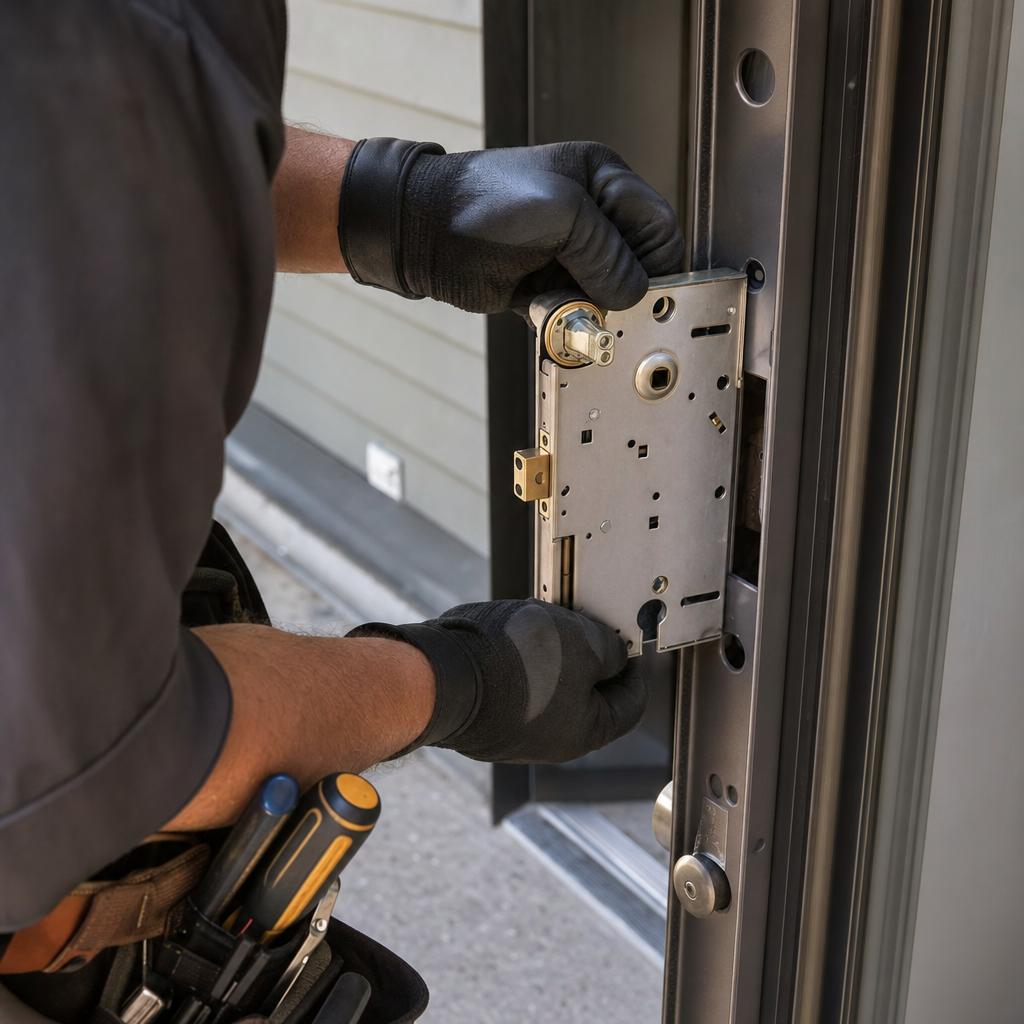
Rekeying changes the internal pin configuration so old keys no longer work. It’s faster and less expensive than replacement. A quality Lock Installation & Rekey by a licensed technician takes 10-15 minutes per lock and costs significantly less than new hardware.
Full Replacement Is Necessary When:
- The cylinder shows visible wear, scoring, or corrosion inside the keyway
- The bolt mechanism is damaged or bent
- The mounting hardware is stripped or the door material is compromised
- You want to upgrade security grade (from Grade 3 residential to Grade 2 or 1 commercial)
- The lock is more than 20 years old and parts are no longer available
- You’re switching from keyed entry to smart lock, or vice versa
In Los Angeles, we frequently replace original Kwikset or Schlage hardware from the 1980s and 1990s in homes from Sherman Oaks to Pasadena. These locks served well for decades, but replacement parts are discontinued and the security grade no longer matches what insurance underwriters expect.
Here’s a practical framework: if you can describe the problem as “who has a key,” rekey. If you can describe it as “the lock doesn’t work right,” replace.
Warning Signs Unique to Smart Locks and Electronic Deadbolts
Electronic locks fail differently than mechanical ones. The warning signs are often misread as “glitches” until the lock fails completely.
Intermittent Recognition
The keypad responds to your code on the third try, or the fingerprint reader works after you dry your finger and try again. Intermittent failures in electronics typically worsen. The capacitive sensor may be degrading, or the processor is having trouble reading stored data. In our Los Angeles service area, we see this often with locks exposed to direct afternoon sun - heat cycling damages electronic components over time.
Battery Drain Faster Than Manufacturer Specification
Most smart locks specify 6-12 months of battery life. If you’re replacing batteries every 6-8 weeks, something is wrong. Causes include:
- Failing motor drawing excess current
- Wi-Fi or Bluetooth radio stuck in search mode
- Corroded battery contacts creating resistance
- Software loop preventing sleep mode
Don’t just buy more batteries. The lock is telling you a component is failing.
Delayed Response
You enter your code and count one-Mississippi, two-Mississippi before the motor engages. Processing delays indicate the microcontroller is struggling. This precedes complete failure, often without warning.
App Connectivity Issues
If your lock drops off your home network repeatedly, or the app shows “offline” when you’re standing next to the door, the radio module may be failing. Before assuming it’s your router, check whether other smart home devices are stable. Isolated lock connectivity problems point to hardware.
Physical Override Problems
Many smart locks include a key override for dead batteries. If that mechanical backup is stiff or difficult to operate, you have two problems - not a reliable backup. Test your override monthly. If it’s not smooth, the lock needs service.
We install and service Schlage Encode, Yale Assure, and other major smart lock lines. When clients in Los Angeles call about “a weird thing my smart lock is doing,” we ask about these specific symptoms. The pattern usually points to a clear diagnosis.
How to Document Warning Signs Before Calling
A flat price quote on the phone requires accurate information. The more precisely you describe what you’re experiencing, the more precise our quote. Here’s how to prepare:
- Photograph the lock from multiple angles. Front of cylinder, edge of door showing bolt, interior mounting plate. This lets us identify the brand and model before we arrive.
- Video the problem behavior. A 10-second clip of the key sticking, or the bolt not extending, communicates more than a paragraph of description.
- Note the brand name. Usually stamped on the key bow or the face of the cylinder. Schlage, Kwikset, Sargent, and others have distinct designs and part availability.
- Count the locks. How many doors? How many locks per door (deadbolt + knob = two)? Do you want them all keyed alike?
- Describe the door material. Solid wood, hollow core, metal, fiberglass? This affects mounting hardware and installation time.
- Check for previous modifications. Has the door been re-drilled for a different lock size? Are there filled holes or adapter plates?
- Test all keys. Do all copies behave the same way? A single worn key suggests key wear; all keys sticking suggests cylinder wear.
When you call Strongbox Lock & Safe Co. at (877) 664-8139 with this information, we can quote a firm price before the truck rolls. No surprises, no bait-and-switch. That’s our flat-price promise.
Los Angeles-Specific Considerations
Climate and local conditions affect lock longevity in ways that matter for Los Angeles homeowners.
Coastal corrosion: Homes from Santa Monica to San Pedro experience salt air corrosion that attacks lock cylinders and mounting hardware. We see accelerated pitting in brass and zinc components, particularly on ocean-facing doors. Stainless steel hardware and regular lubrication extend service life significantly.
Heat cycling: Inland valleys and hillside homes experience extreme temperature swings - 50°F mornings to 90°F afternoons. Metal components expand and contract, loosening mounting screws and affecting electronic lock sensors. Annual tightening of hardware prevents most heat-related failures.
Seismic settling: Los Angeles sits on active fault systems, and minor seismic events cause cumulative door frame shifting. The “lift the handle” problem we described is often seismic in origin, not just age. Strike plate realignment is routine maintenance in this market.
Code and insurance requirements: Many Los Angeles insurers now require Grade 2 or higher deadbolts for full coverage. Original Grade 3 hardware from the 1990s may leave you underinsured. We can assess your current hardware grade and document it for your agent if needed.
Neighborhood-specific risks: In areas with higher property crime rates, we recommend more frequent inspection of lock hardware for tampering evidence. The residential locksmith services we provide include security assessments that account for local conditions.
Common Mistakes to Avoid
- Spraying WD-40 into the keyway. This attracts dust and gum up the pins. Use graphite powder or a lubricant specifically formulated for locks. WD-40 is a solvent, not a lubricant, and we clean it out of failed cylinders weekly.
- Ignoring the “lift the handle” quirk. That misalignment is grinding metal against metal every time you lock the door. The strike plate wears, the bolt wears, and eventually something breaks. Fifteen minutes of adjustment prevents a $200+ service call.
- Copying a worn key. When your original key is worn, a copy made from it replicates the wear pattern. The new key works worse than the old one. Always have copies made from a factory code or a fresh key.
- Waiting for complete failure. A lock that sticks on Tuesday will stick worse on Saturday night when every locksmith is booked or charging emergency rates. Address warning signs on your schedule, not the lock’s.
- Buying “universal” replacement hardware online. Door prep dimensions vary. The lock that “fits most doors” rarely fits yours without modification, and return shipping is your problem. We carry Schlage, Kwikset, Sargent, and other lines with the exact specifications your door needs.
- Rekeying without checking bolt condition. A locksmith who only rekeys the cylinder and ignores a binding bolt has sold you half a solution. We inspect the complete mechanism every time.
- Assuming smart locks don’t need maintenance. Battery contacts need cleaning. Firmware needs updating. Physical components need inspection. Electronic doesn’t mean maintenance-free.
When to Call a Professional
Call a licensed locksmith when: you notice any security warning sign; a mechanical symptom persists more than two weeks; you’re unsure whether rekeying or replacement is appropriate; you’re changing occupancy (new home, new tenant, ended relationship); or your lock is more than 15 years old and has never been serviced.
In Los Angeles, Strongbox Lock & Safe Co. offers free estimates - call (877) 664-8139 and we’ll quote a flat price before any work begins. Our background-checked, uniformed technicians show ID at every door, and every job is backed by our 90-Day Done Right Promise in writing. No paperwork, no arguing. If it’s not right, we come back.
We also offer a permanent 5% discount for seniors and veterans, and a free second opinion on any written estimate you’ve received elsewhere. A square deal: the price we quote is the price you pay.
Frequently Asked Questions
Residential lock replacement in Los Angeles typically ranges from $120-$280 per lock including installation, depending on hardware grade and door preparation needs - see our Locksmith Cost Breakdown: The Los Angeles Homeowner’s Reference for 2026 for full pricing context. High-security cylinders like Medeco or Mul-T-Lock run higher, while standard Schlage or Kwikset Grade 2 deadbolts fall in the middle of that range. Call (877) 664-8139 for a firm quote based on your specific locks - estimates are free.
Rekeying is almost always cheaper, typically $45-$85 per lock compared to $120-$280 for replacement. Rekeying makes sense when the hardware is sound and you simply need new keys. Replace when the mechanism is worn, you want to upgrade security grade, or you’re switching to smart lock technology. We’ll tell you honestly which path serves you better.
Yes, a licensed locksmith can rekey a lock without the original key by picking or decoding the existing combination, then repinning to a new one. This adds modestly to the service time but not dramatically to the cost. In Los Angeles, we handle this routinely for new homeowners and property managers.
The grade is usually stamped on the latch face or edge of the door, marked “ANSI Grade 1,” “Grade 2,” or “Grade 3.” Grade 3 is basic residential, Grade 2 is light commercial or high-security residential, and Grade 1 is commercial heavy-duty. If you can’t locate the marking, photograph the lock and we can identify it from the image.
Your locks were likely keyed differently at installation or replacement. A locksmith can rekey them all to operate with one key - “keyed alike” - provided they’re compatible brands. This is one of our most common requests from Los Angeles homeowners who are tired of carrying multiple keys.
We schedule standard service appointments within 24-48 hours throughout Los Angeles. Same-day availability is often possible depending on your location and our route that day. Emergency lockout response is immediate, 24/7, with a live person answering every call - no voicemail trees.
The Bottom Line
Locks communicate their condition through subtle mechanical changes long before they fail. The key that sticks, the bolt that stops short, the handle that wobbles - these are not quirks to tolerate. They’re diagnostic signals. Learning to read them lets you address problems on your schedule, at standard rates, rather than in crisis at emergency rates. Document what you observe, distinguish security concerns from mechanical wear, and call for a flat-price quote before the situation escalates. For more guides & resources on keeping your home secure, visit our blog. In 42 years of serving Los Angeles, we’ve learned that the homeowners who pay attention to these warning signs never get caught outside their own door.
Written by the team at Strongbox Lock & Safe Co., serving Los Angeles since 2013.